
August 6, 2026
This expert guide explores the strategies used by successful Fractional CTOs to build referral networks, strengthen investor relationships, scale their personal brand, and create sustainable growth. Learn how relationship intelligence is becoming a critical competitive advantage and discover how Power Map Contacts helps Fractional CTOs organize multiple professional identities, manage strategic relationships, preserve relationship capital, and uncover hidden opportunities across their technology ecosystem.
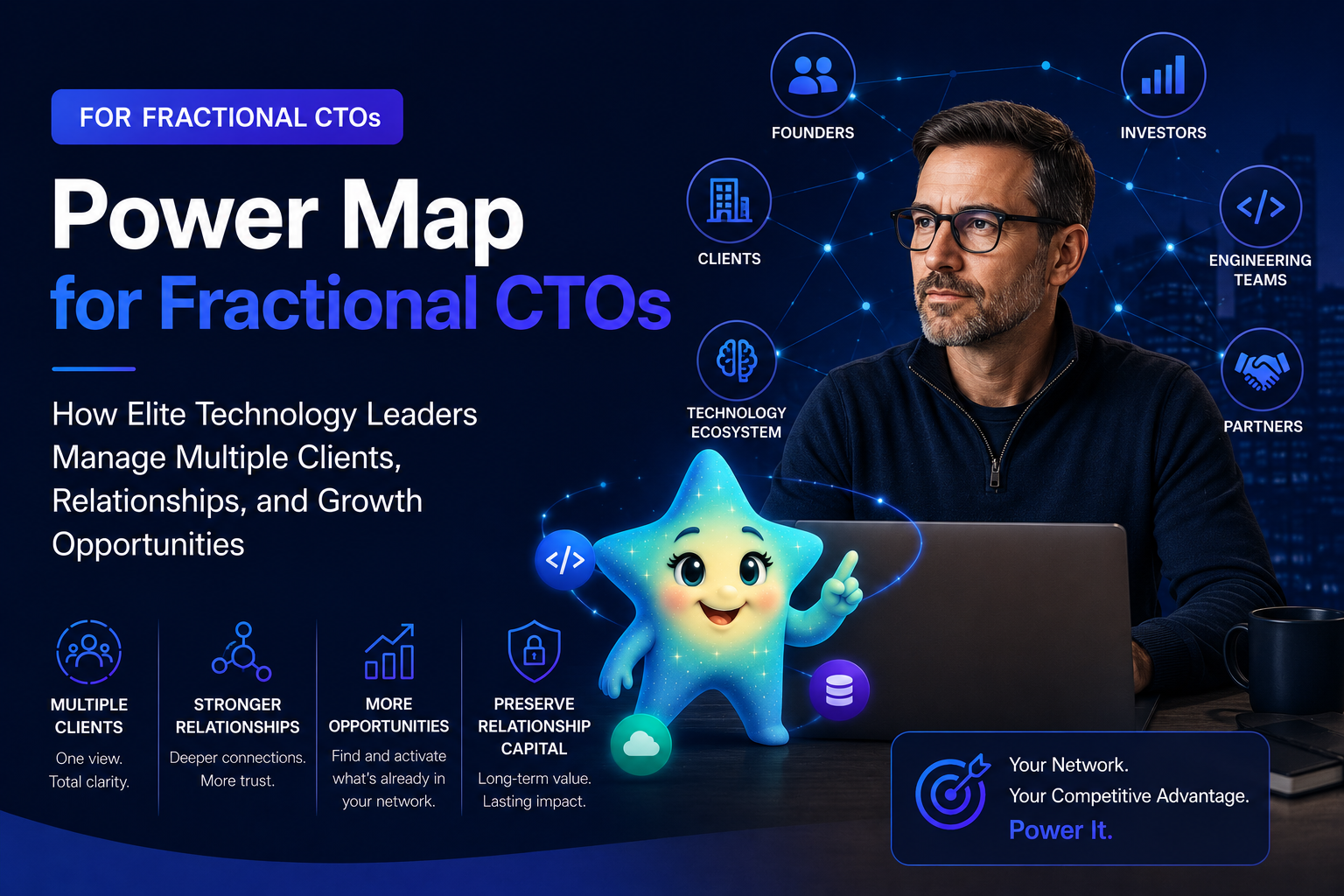
The technology leadership landscape has fundamentally changed.
Ten years ago, hiring a Chief Technology Officer typically meant recruiting a full-time executive.
Today, startups, scale-ups, venture-backed companies, family businesses, and even private equity portfolios increasingly rely on Fractional CTOs to access senior technology leadership without the cost and commitment of a full-time executive.
This shift has created one of the fastest-growing segments in technology consulting.
Yet most Fractional CTOs quickly discover that technology expertise alone is not enough.
The real challenge is managing multiple companies, leadership teams, investors, vendors, advisors, and opportunities simultaneously.
The best Fractional CTOs do not simply manage technology.
They manage ecosystems.
Organize your contacts, profiles, and personal brand in one app built for the new multi-identity economy.

Technical skills may open the door.
Relationships create long-term success.
The most successful Fractional CTOs consistently master five areas.
Companies rarely hire a Fractional CTO to write code.
They hire them to:
The role has evolved from technical expert to business leader.
Many technology initiatives fail because of poor communication.
Elite Fractional CTOs can effectively communicate with:
Technology leadership is increasingly a communication discipline.
The best Fractional CTOs rarely rely on cold prospecting.
Most engagements come through:
Your network becomes your growth engine.
Unlike traditional CTOs, Fractional CTOs often support multiple organizations simultaneously.
Each company brings:
Managing these parallel ecosystems efficiently becomes a competitive advantage.
Most future engagements already exist somewhere within your network.
The challenge is identifying:
Opportunity visibility becomes a strategic asset.
Many technology leaders underestimate the operational complexity of their own business.
They manage:
3 to 10 companies simultaneously is becoming common.
A Fractional CTO may simultaneously act as:
Every engagement generates:
Without a structured system, valuable relationships quickly become fragmented.
The highest-performing Fractional CTOs focus on creating a repeatable growth system.
Founders generate referrals.
A strong founder network often produces:
Every founder relationship has long-term value.
Venture capital firms and private equity funds represent powerful referral channels.
Many investors maintain portfolios requiring:
Developing investor trust can create recurring opportunities.
Technology expertise is increasingly commoditized.
Visibility creates differentiation.
High-performing Fractional CTOs regularly:
Visibility drives credibility.
Credibility drives demand.
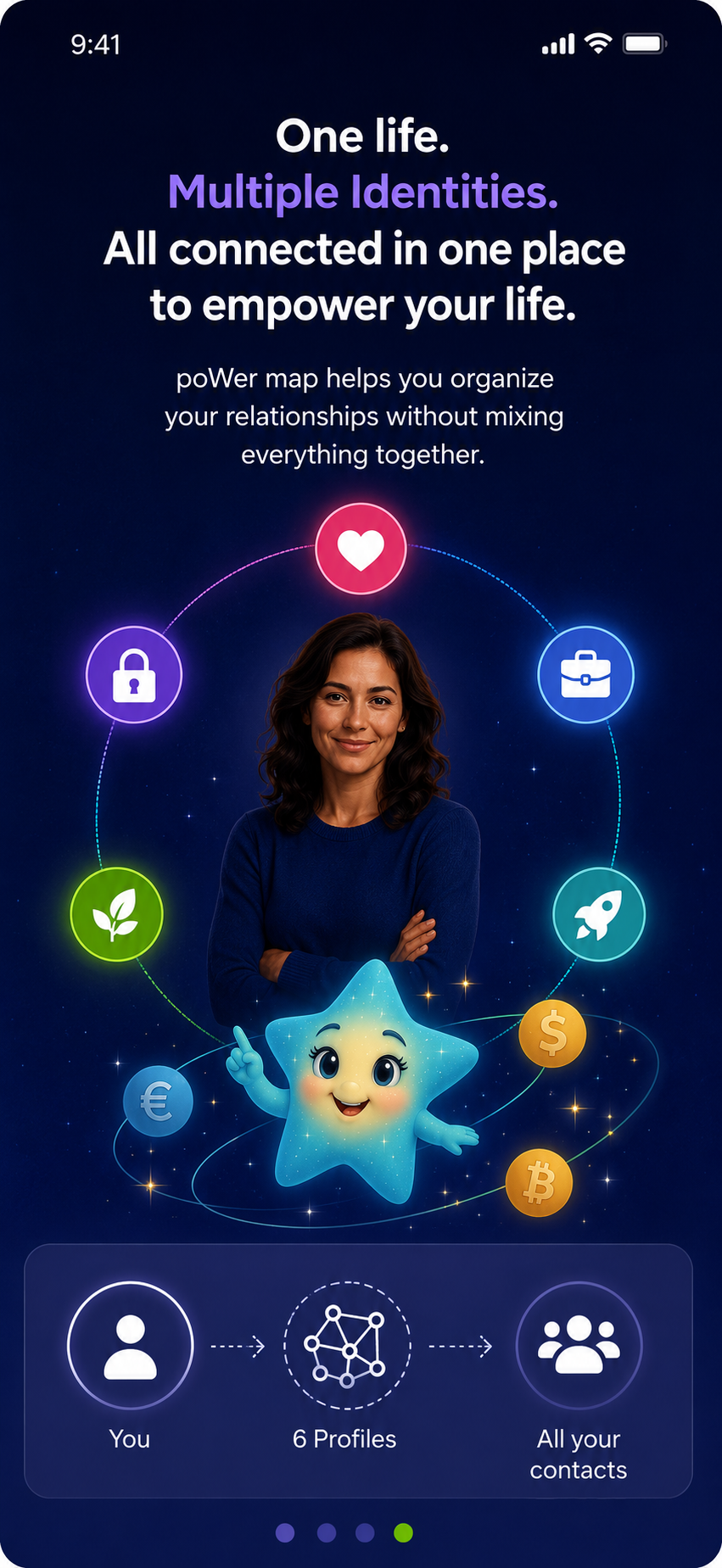
With our mobile app Power Map Contacts, organize your contacts, profiles, and identities in one app built for the multi-identity world.
Create personal, professional, or private profiles. Map your network. Take control of your personal brand.
Most successful Fractional CTOs rely on specialized tools.
This remains one of the least optimized areas.
Most Fractional CTOs still manage relationships through:
As their network grows, this becomes increasingly inefficient.
Artificial Intelligence is rapidly automating parts of the technology leadership process.
AI can assist with:
However, AI cannot replace:
The future belongs to technology leaders who combine technical expertise with relationship capital.
Power Map Contacts was designed for professionals managing multiple identities, networks, and opportunities.
Many Fractional CTOs simultaneously operate as:
Power Map allows these identities to coexist within a single relationship intelligence platform.
Separate relationships by:
Gain clarity across your professional ecosystem.
Your network should increase in value over time.
Power Map helps maintain and activate key relationships throughout your career.
Many future engagements already exist within your existing network.
Power Map helps reveal those opportunities.
Technology is evolving faster than ever.
Yet one principle remains constant:
People do business with people they trust.
The most successful Fractional CTOs will not be those with the strongest technical skills alone.
They will be those who can build, manage, and activate powerful professional networks.
Because your next client, next advisory engagement, next board seat, or next investment opportunity is likely already within your network.
You simply need the right map.
Manage multiple clients, professional identities, technology ecosystems, investor relationships, and growth opportunities from a single relationship intelligence platform.
Your network is your most valuable technology asset.
Start managing it like one.


