
August 6, 2026
Influencers are no longer building audiences—they are building digital assets. Discover why the most successful creators are creating digital doubles to protect their privacy, scale their opportunities, and grow their Identity Capital in the age of AI.
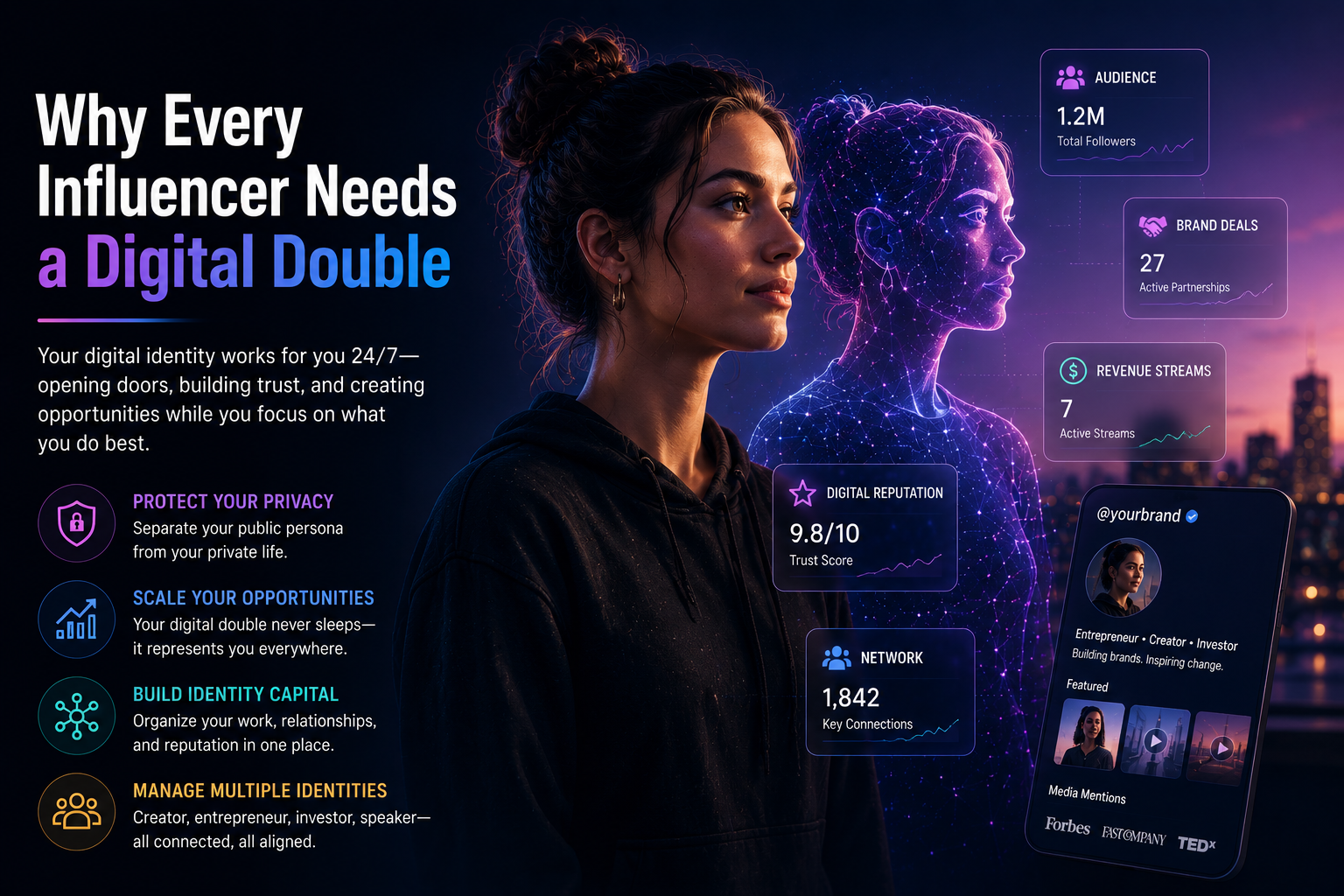
The first generation of influencers built audiences.
The next generation will build digital doubles.
This may sound like science fiction.
It isn't.
It is rapidly becoming one of the most important shifts in the evolution of the Creator Economy.
For more than a decade, creators focused on growing followers, increasing engagement, and securing sponsorships.
These objectives remain important.
But artificial intelligence is changing the economics of attention.
Content is becoming easier to create.
Distribution is becoming increasingly automated.
Algorithms are becoming increasingly crowded.
As a result, the competitive advantage of creators is shifting.
The future may belong not to those who produce the most content.
But to those who build the most valuable identities.
And every valuable identity eventually requires a digital double.
The first phase of the Creator Economy was about access.
Platforms such as YouTube, Instagram, TikTok, Twitch, and Substack gave individuals direct access to audiences.
The second phase was about monetization.
Creators learned how to generate revenue through:
The third phase is now emerging.
It is about identity.
Creators are no longer simply building audiences.
They are building ecosystems.
The creator has become the brand.
The brand has become an asset.
And assets require management.
Organize your contacts, profiles, and personal brand in one app built for the new multi-identity economy.

Every creator eventually encounters the same limitation.
Time.
There is only one of you.
You can only attend one event at a time.
You can only answer a limited number of messages.
You can only maintain a limited number of relationships.
You can only create a limited amount of content.
Yet your audience expects constant availability.
Your sponsors expect responsiveness.
Your community expects engagement.
Your opportunities continue to multiply.
The result is a paradox.
Success creates complexity.
The more successful a creator becomes, the harder it becomes to scale themselves.
A digital double is not a fake version of yourself.
Nor is it merely an avatar.
A digital double is a structured digital representation of your identity.
It contains:
Over time, it becomes an extension of your presence.
A creator's digital double can help organize opportunities, represent achievements, maintain context, and make identity discoverable.
It becomes a living operating system for personal brand management.
Most creators don't realize they are already managing multiple identities.
Consider a successful influencer.
They may simultaneously be:
Each identity attracts different audiences.
Each audience generates different opportunities.
Each opportunity creates different relationships.
This is why the Creator Economy is gradually becoming the Identity Economy.
The creator is no longer managing one audience.
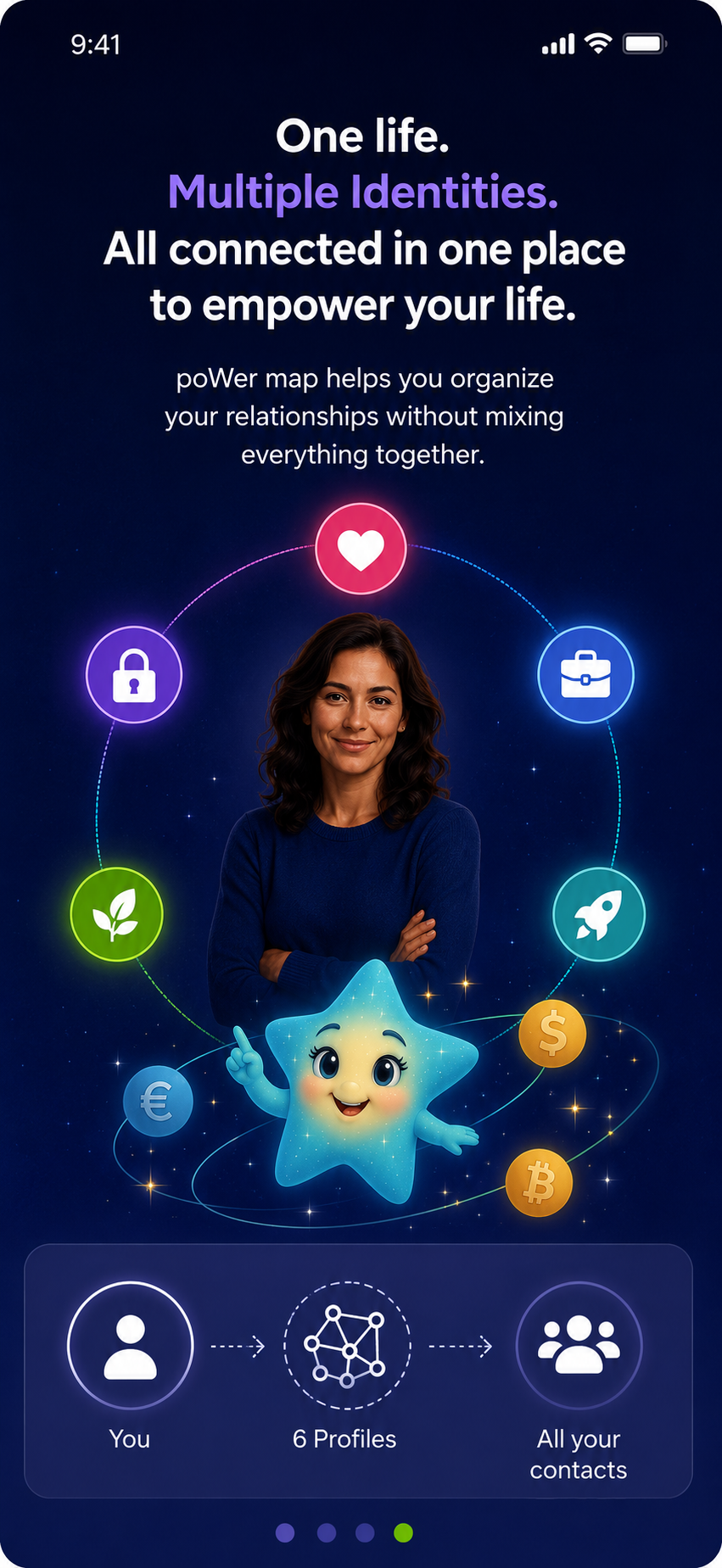
They are managing an ecosystem of identities.
Many creators learn an uncomfortable lesson after achieving visibility.
Exposure creates vulnerability.
As audiences grow, privacy becomes increasingly difficult to maintain.
Personal information becomes easier to discover.
Family members become more visible.
Professional and personal relationships begin to overlap.
Historically, artists solved this problem through stage names.
The world knew Lady Gaga.
Few knew Stefani Germanotta.
The world knew The Weeknd.
Few knew Abel Tesfaye.
Identity separation has always been one of the most powerful tools available to public figures.
The digital double extends this concept into the AI era.
It allows creators to separate public visibility from private reality.
For years, content was the scarce resource.
Today, AI is making content abundant.
Articles can be generated.
Images can be generated.
Videos can be generated.
Music can be generated.
Code can be generated.
As creation becomes easier, another asset becomes more valuable:
Trust.
People trust people.
People trust reputations.
People trust identities.
This means that the economic value of a creator increasingly comes not from the content itself, but from the identity behind it.
The digital double becomes the container of that value.
With our mobile app Power Map Contacts, organize your contacts, profiles, and identities in one app built for the multi-identity world.
Create personal, professional, or private profiles. Map your network. Take control of your personal brand.
Most creators believe their audience is their primary asset.
In reality, audiences are rented.
Platforms own distribution.
Algorithms control visibility.
Policies change.
Accounts disappear.
What remains?
Identity.
Reputation.
Relationships.
Communities.
Trust.
These assets travel with the creator.
They are portable.
They compound.
They become more valuable over time.
The digital double becomes the infrastructure that preserves and organizes these assets.
Traditional influencers focused on personal branding.
The next generation may focus on Identity Capital.
Identity Capital includes:
These assets increasingly determine access to opportunities.
The most successful creators of the next decade may not be those with the largest audiences.
They may be those with the strongest Identity Capital.
Generation Alpha is growing up in a world where multiple identities are normal.
A teenager today may simultaneously be:
Tomorrow's influencers may not manage one brand.
They may manage portfolios of identities.
Each identity serving a different purpose.
Each identity attracting a different network.
Each identity generating different forms of value.
The digital double becomes the connective tissue linking them together.
As identities multiply, relationships multiply.
The creator economy has focused heavily on audience management.
The Identity Economy will focus on relationship management.
This creates a new category:
Identity Relationship Management (IRM).
IRM helps individuals:
Just as CRM transformed how companies manage customers, IRM may transform how creators manage themselves.
The most successful influencers of the next decade may not be those who create the most content.
They may be those who build the strongest identities.
Artificial intelligence is making creation abundant.
Trust remains scarce.
Reputation remains scarce.
Authenticity remains scarce.
Identity remains scarce.
The digital double is emerging as the infrastructure that allows creators to preserve, organize, and scale these assets.
Because in the coming Identity Economy, your most valuable employee may not be a team member.
It may be a digital version of yourself.
And the creators who start building it today may have a significant advantage tomorrow.


